Eco-Friendly Shoe Innovation | Feebees Sustainable Footwear Development
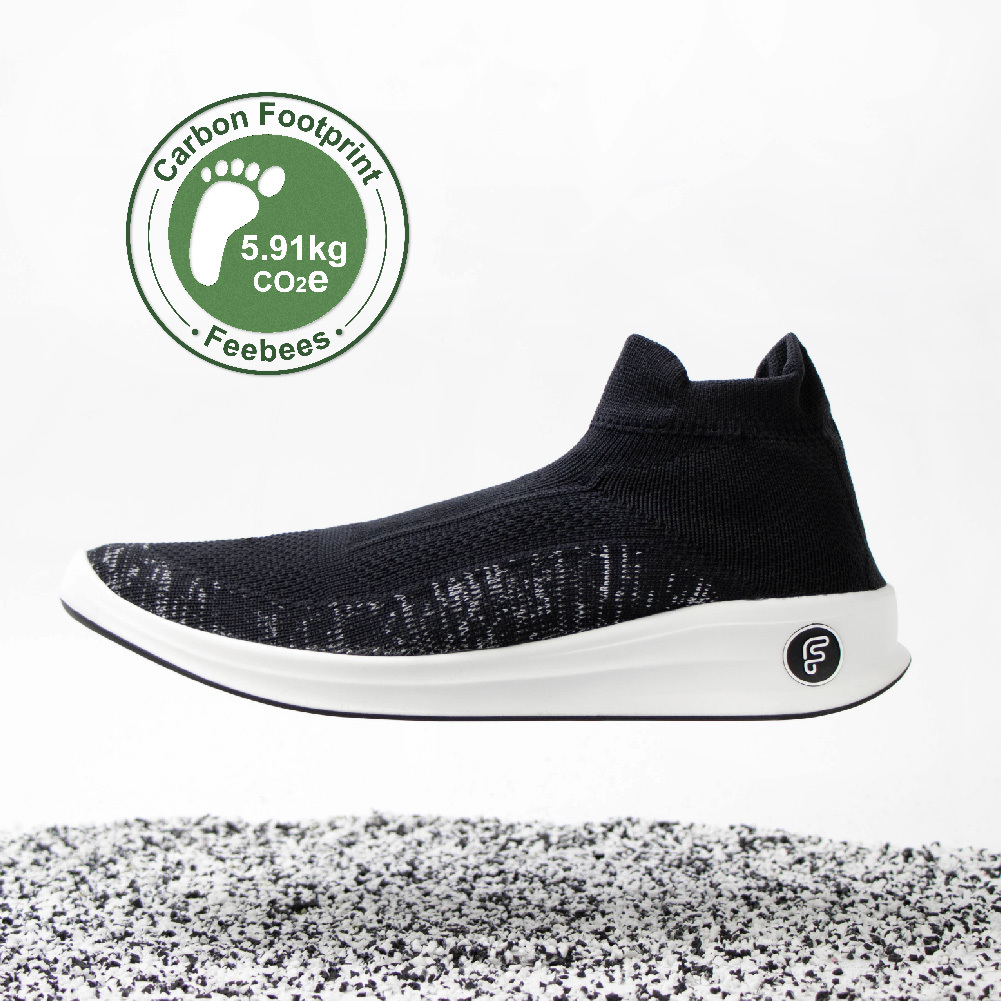
Feebees transforms footwear manufacturing with breakthrough eco-friendly processes. From barefoot philosophy to low-carbon production methods, Feebees creates comfortable, durable sock-shoes while advancing circular economy innovation—pioneering sustainable footwear for the future.
Eco-Shoe Origins: The First Pair Made for My Daughter
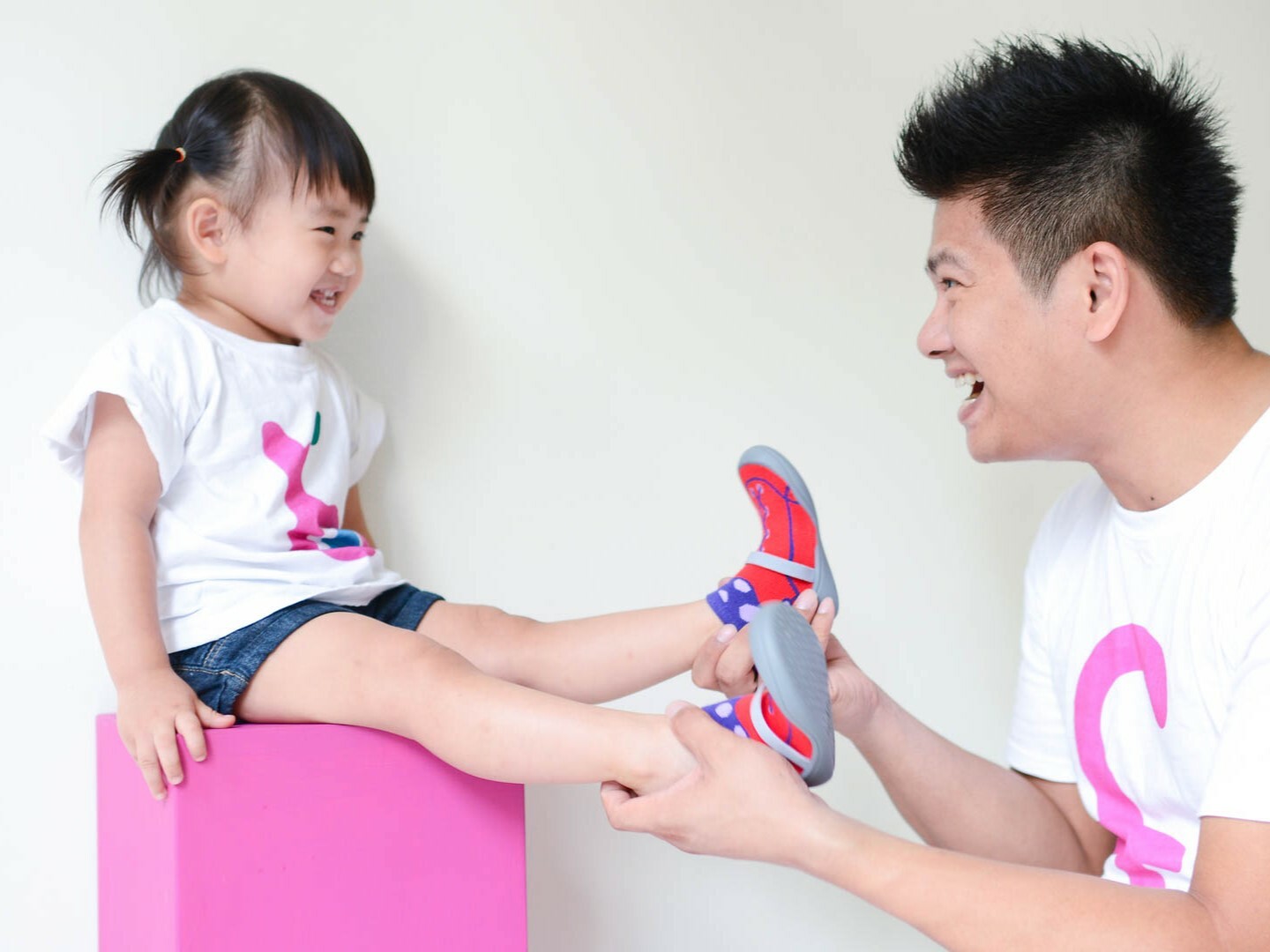
From a Child's First Steps to a Sustainable Future
Feebees was born from founder Kuming Chen's desire to create the most natural shoes for his daughter.
When transitioning from tooling factory to brand, the traditional footwear industry had become an immovable giant. Change wasn't the solution—complete redefinition was. True innovation doesn't add features to existing models; it rethinks fundamentals: What is a shoe? What do people truly need from footwear?
At its core, shoes protect feet while expressing personal style. Yet contradictions abound: comfort sacrificed for fashion, massive energy wasted for convenience, human labor exploited for production. These impossible trade-offs create ethical dilemmas that most businesses ignore. But for a brand born from parenthood—driven by the same care a father shows his daughter—looking away was never an option.
Today, this founding purpose continues through eco-friendly and recyclable shoe development, remaining the driving force behind our commitment to sustainable materials and environmental design.
Complete Carbon Footprint Certification
After years of R&D, Feebees' environmental commitment faced its defining moment: carbon footprint assessment. The process felt like holding a lottery ticket—if results disappointed, years of effort could vanish instantly.
Fortunately, our first assessment revealed 5.91kg CO₂ for adult sock-shoes and 1.6kg for children's models. With industry average at 16kg, we had achieved 60% carbon reduction—reaching our first environmental milestone.
Initially, we simply pursued efficient, waste-free manufacturing without specifically targeting carbon metrics. But this assessment validated our efforts and proved our approach worked.
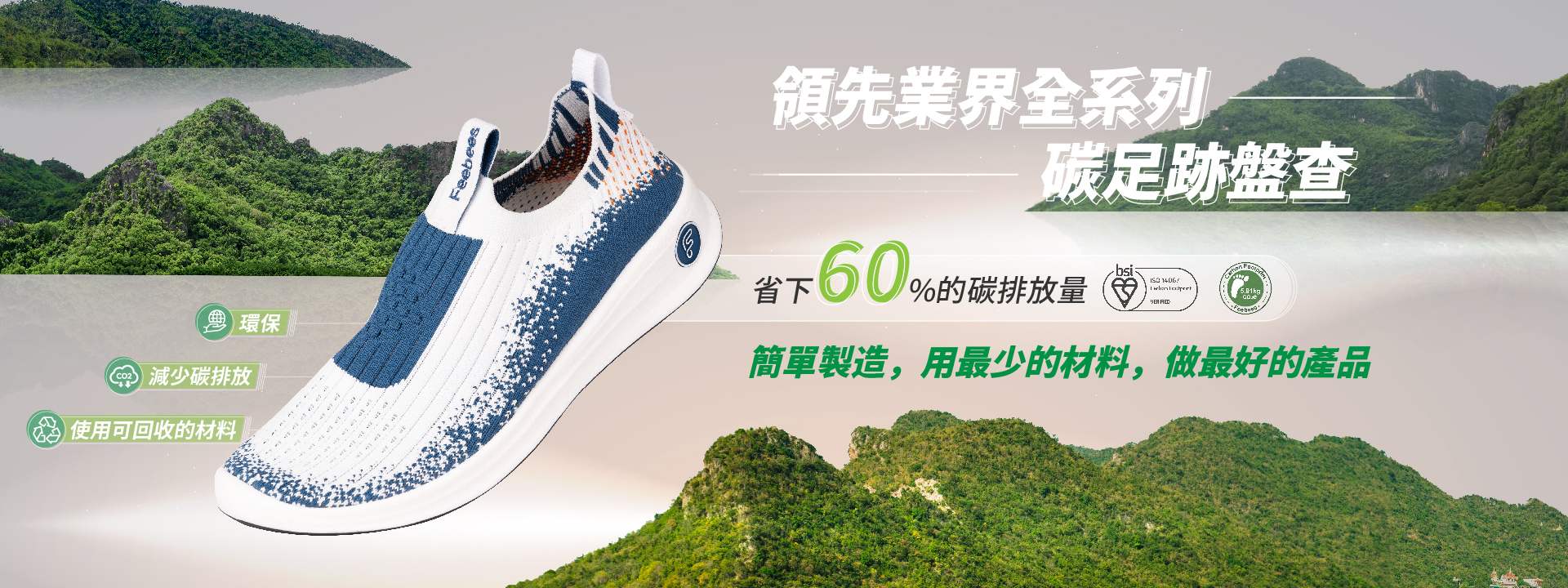
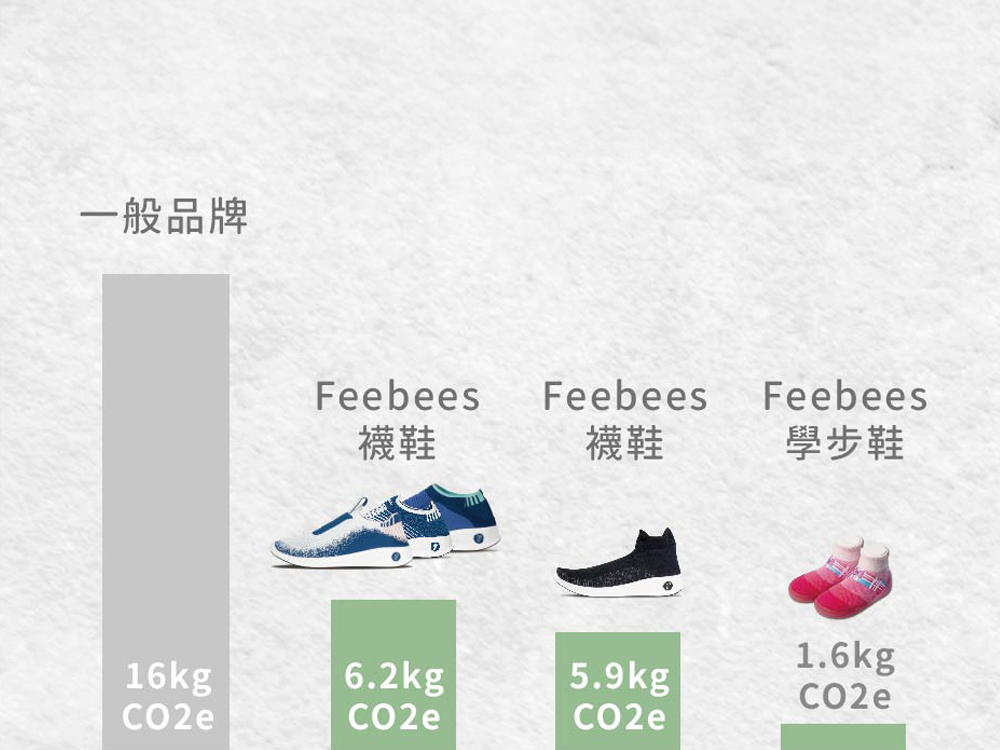
Feebees prioritizes environmental protection, achieving complete carbon footprint assessment across our entire collection: just 5.91-6.2kg CO₂e per pair, with children's first-walker shoes at only 1.6kg CO₂e—over 60% less carbon emissions than conventional footwear.
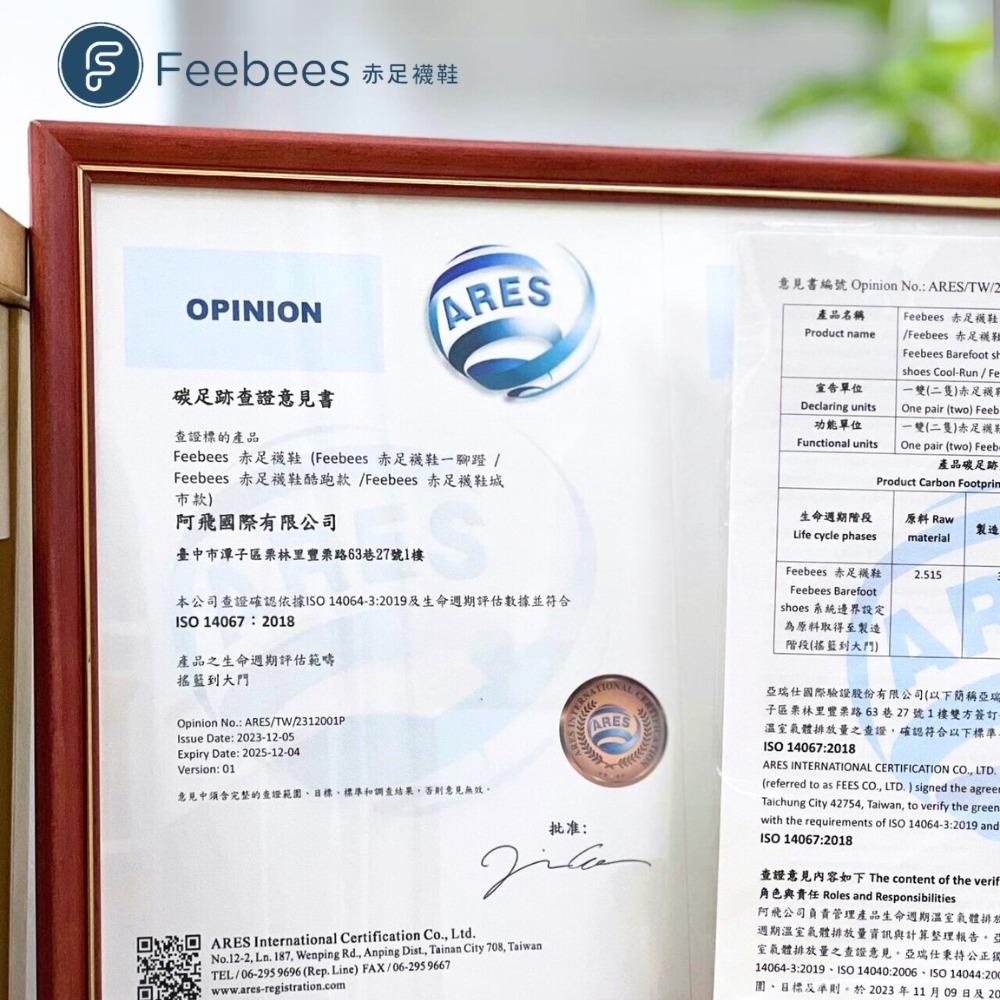
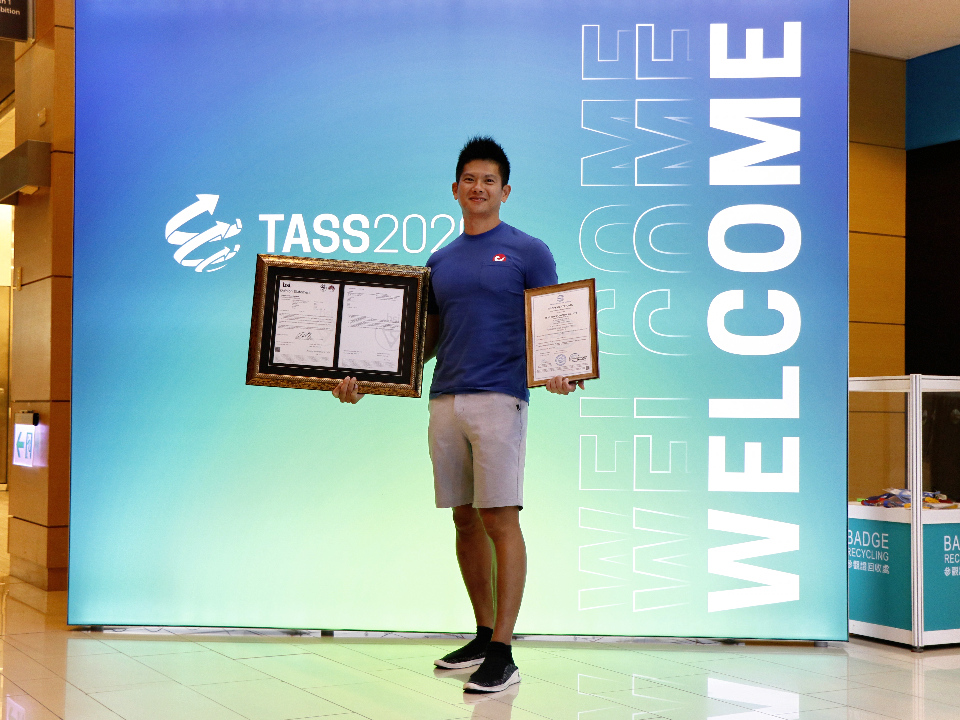
▲ARES 亞瑞仕國際 碳足跡認證證書
Innovative Low-Carbon DIP Technology
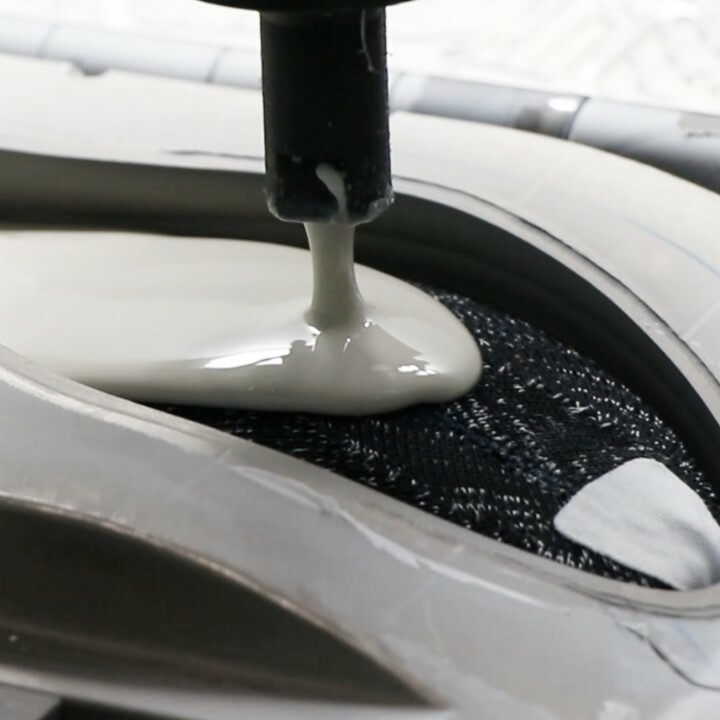
From 200 Steps to 5: Simplified Manufacturing and the Glue-Free Sock-Shoe Revolution
Traditional shoemaking requires 200+ steps. Feebees DIP one-piece molding technology completes entire sock-shoes in just 5 steps, reducing carbon footprint to 5.91kg and cutting energy consumption by 60%.
Feebees' seamless upper-sole integration eliminates glue entirely, avoiding chemical pollution while creating more durable, eco-friendly footwear—transforming traditional shoemaking's environmental burden.
Cradle-to-Cradle Inspiration: Recycling Old Shoes into New Products
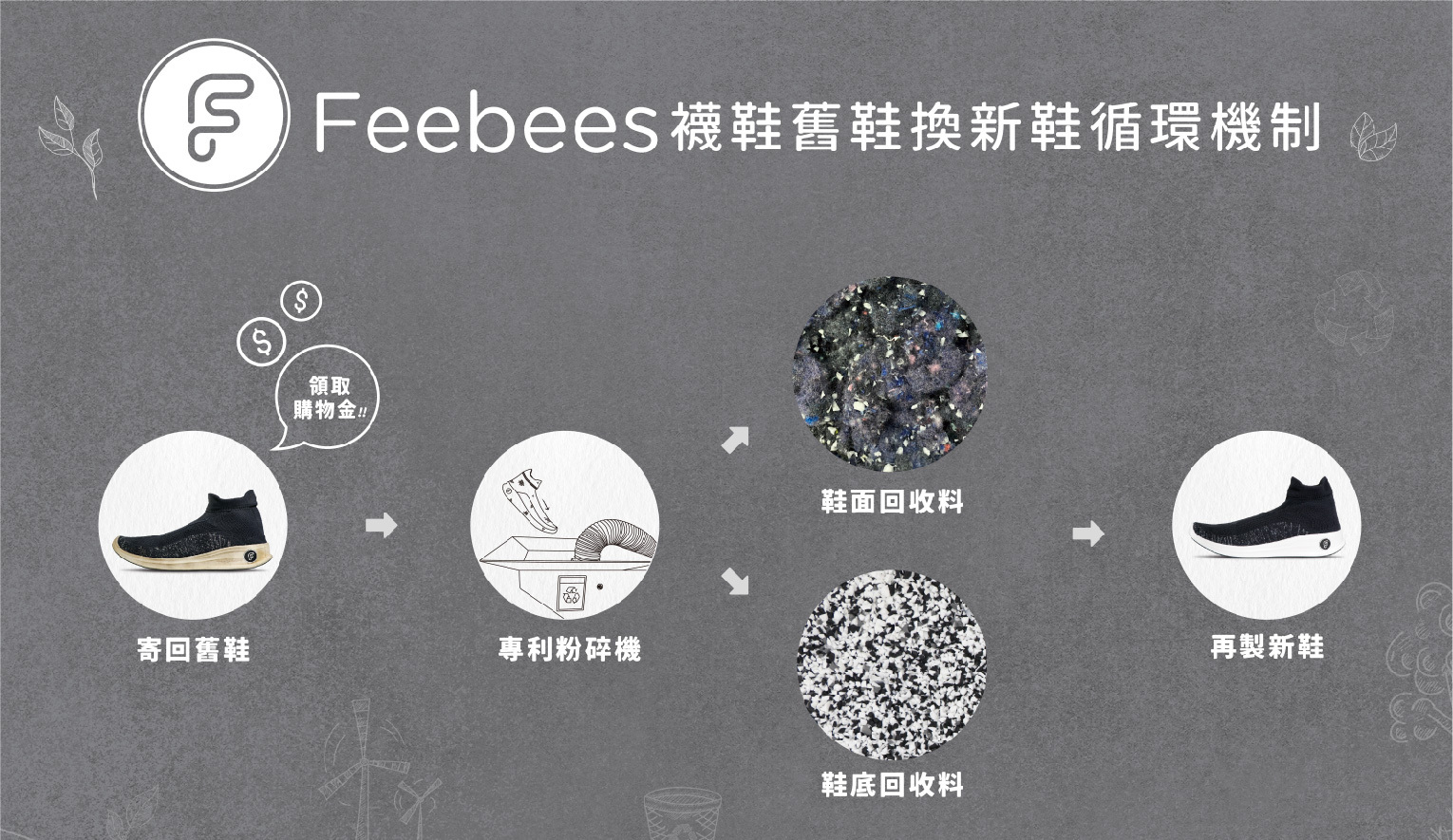
Why Not Implement This Great Idea?
Shoe Recycling Program: Full Circular Manufacturing Turning Old Shoes into New
Feebees previously encouraged consumer environmental participation through a shoe recycling program. Customers could return worn sock-shoes to the company and receive substantial rebates. Collected shoes were pulverized through specially developed machinery and transformed into new shoe materials, achieving 80% material recovery rates.
This full circular production model enabled every sock-shoe to be reused, reducing environmental pollution from discarded footwear. Feebees earned Global Recycled Standard (GRS) and RCS certification, becoming an exemplary model for eco-friendly footwear.
So why didn't this beautiful regenerative system succeed? Several key reasons:
Research revealed consumers don't prioritize environmental benefits alone
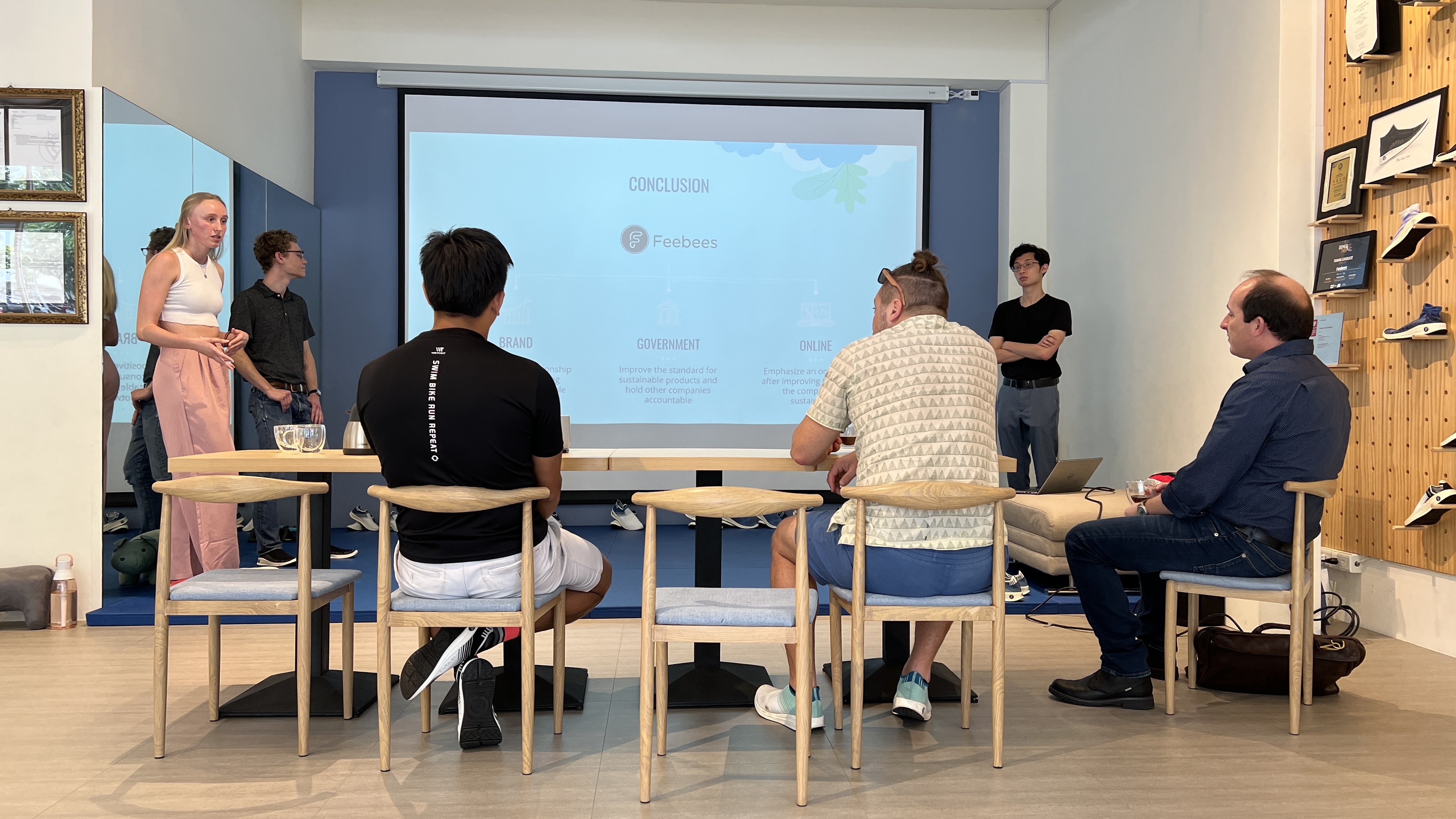
For several years, Feebees founder collaborated with Worcester Polytechnic Institute (WPI) students interning in Taiwan to explore sustainable footwear solutions. Research revealed consumers' top three priorities: comfort, design, and brand image. Among over ten evaluation factors, environmental impact ranked dead last—directly correlating with our campaign's difficulty gaining traction.
This validated a hard truth: environmental excellence alone isn't enough. The finding prompted us to fundamentally rethink our regenerative model. While maintaining trade-in incentive programs for customers, we began restructuring our overall approach.
Does Recycling Mean It's Sustainable?
We successfully transformed old shoes into recycled materials for new footwear production and earned relevant certifications. But a critical problem emerged: using recycled content didn't reduce virgin material requirements. If a shoe needed 100g of raw material, adding 30% recycled content still required 100g of virgin material. This was "recycling for recycling's sake"—completely disconnected from actual plastic reduction.
This realization forced deep reflection: Should we leverage hard-earned certifications for marketing benefits, or return to our founding purpose of creating genuinely sustainable shoes?
Ultimately, we chose to abandon our achievements—even with everything ready to launch. This "perfect concept" remains only a valuable learning experience.。
Breaking the Low-Quality Eco-Shoe Stereotype
Kuming Chen explains: "Our first pair was made for my daughter. Of course I wanted the highest quality—shoes that would last."
Durability Meets Comfort: Transforming Eco-Shoe Perceptions
During WPI student collaboration, we discovered consumers held extremely negative views about eco-friendly shoes: prone to breaking, unattractive design, and paradoxically expensive. Mentioning "eco-shoes" didn't create goodwill—it triggered skepticism. Sound familiar? Ever experienced shoes hydrolyzed or hardened after storage?
Continuous Innovation: Feebees' Future Vision
After years of material R&D, Feebees shoes remain soft and elastic even after 4-5 years of use or storage—completely unlike conventional footwear that hardens with age. This exceptional durability extends product lifespan while preventing resource waste from frequent replacement.
Our next goal: truly repairable shoes. Worn soles could return to factory for material reinjection—transforming sustainability from numerical claims into market reality, achieving genuine circular economy and discovering the authentic path to eco-friendly footwear.
Advancing Eco-Shoe Technology for Sustainable Breakthroughs
Feebees continues focusing on environmental technology R&D, further improving material recyclability and product durability. We're exploring new possibilities in sole materials and upper design, committed to creating lower-carbon, lighter, and more comfortable footwear that meets diverse user needs.
Feebees eco-shoes extend product lifespan while leading the footwear industry toward circular economy futures through our complete low-carbon collection.
Choose Feebees—choose a green, sustainable lifestyle. Join us today and make every step lighter and more environmentally responsible.


